
URL: https://www.lensed.ai (note: non-www version shows 404) Linear Issue: REI-35
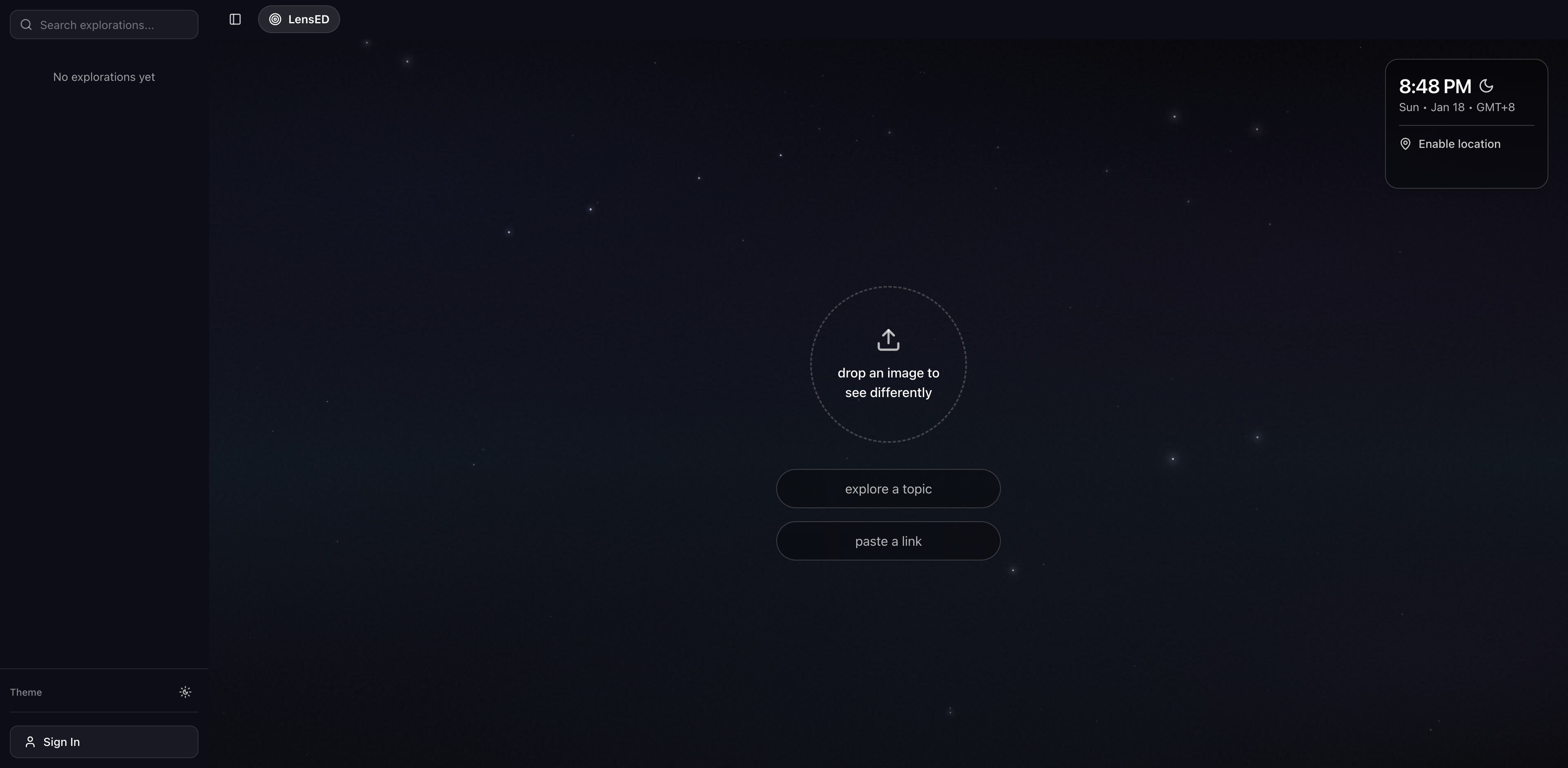
LensED is an AI-powered educational exploration platform that allows users to explore topics through multiple "lenses" (perspectives). It generates AI-curated content tailored to different educational levels and subject areas.
Users can explore topics via three input methods:
- Text input: Type any topic to explore
- Link import: Paste a URL to analyze
- Image upload: Drop an image to explore visually
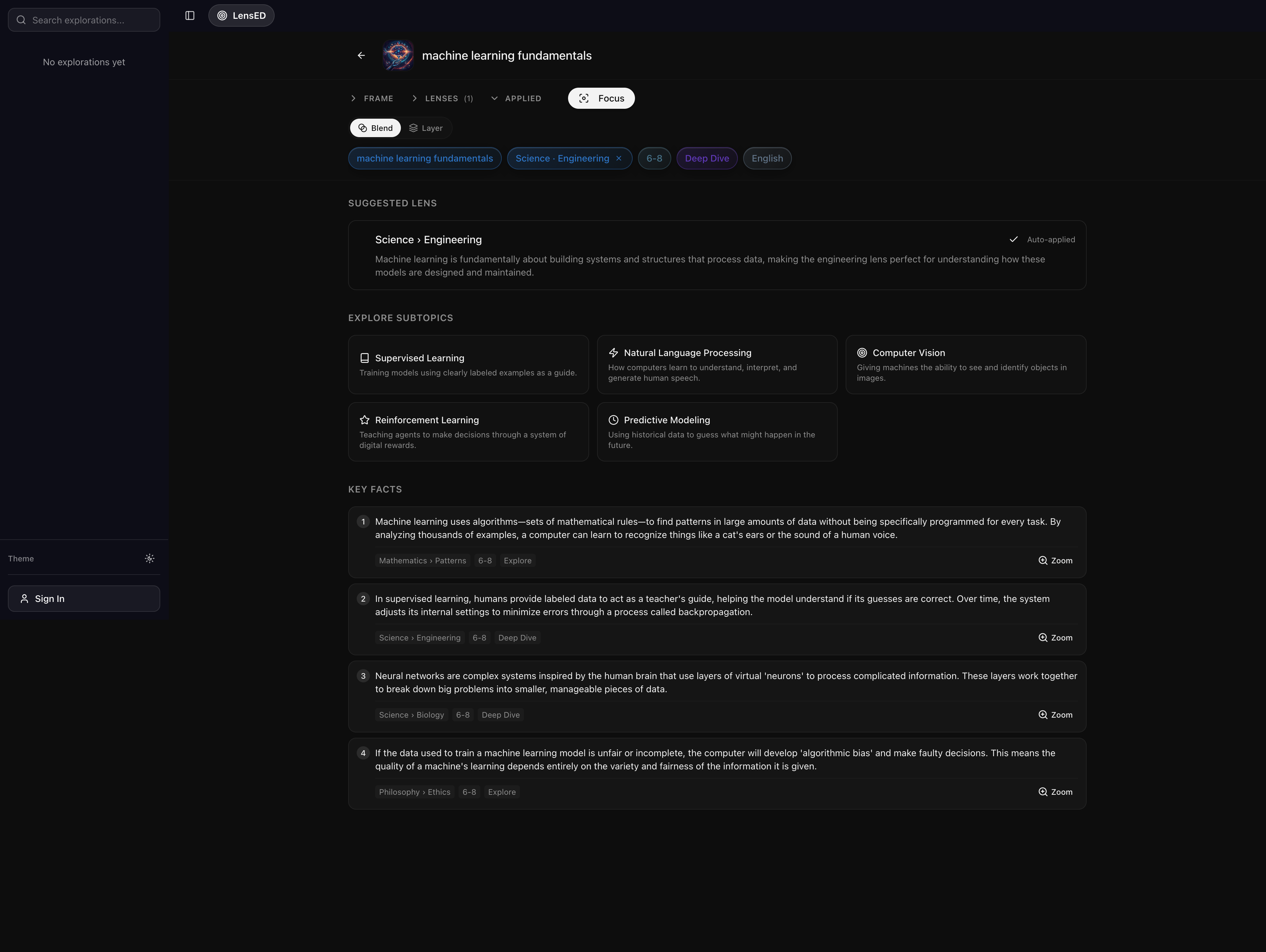
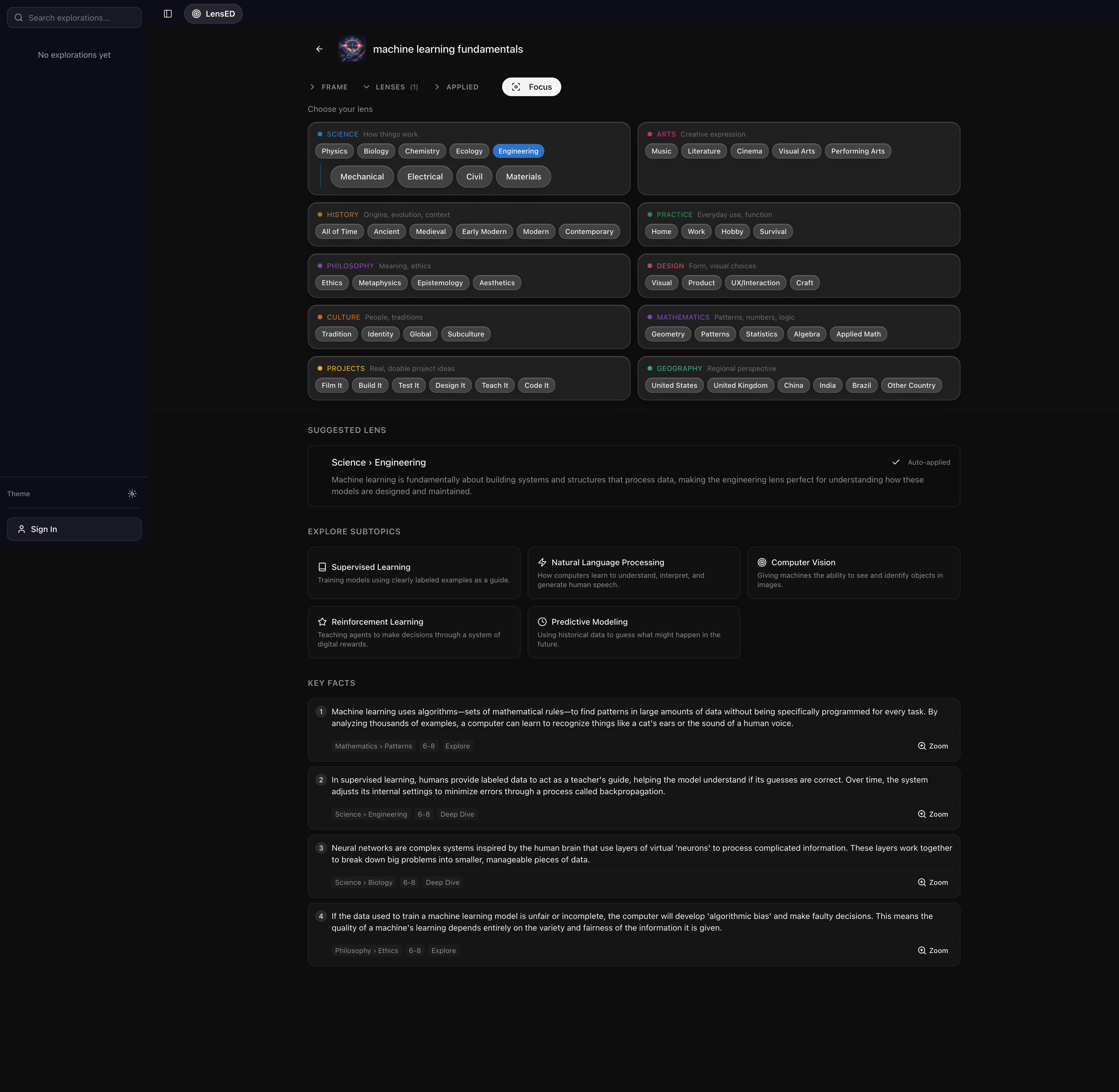
When you enter a topic (e.g., "machine learning fundamentals"), the system:
- Generates an AI image visualization
- Suggests relevant lenses automatically
- Provides subtopics to explore
- Lists "Key Facts" with different perspective tags
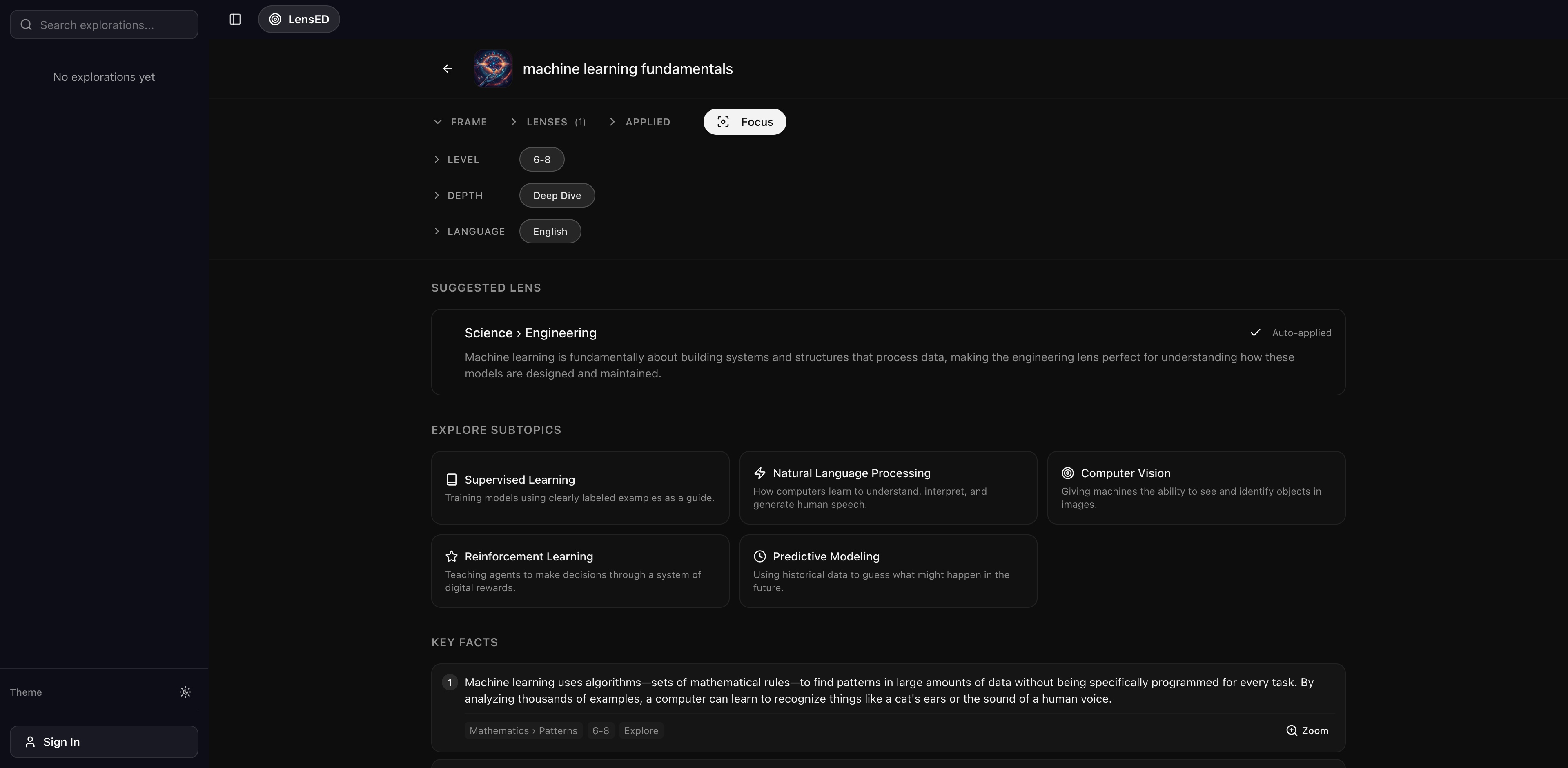
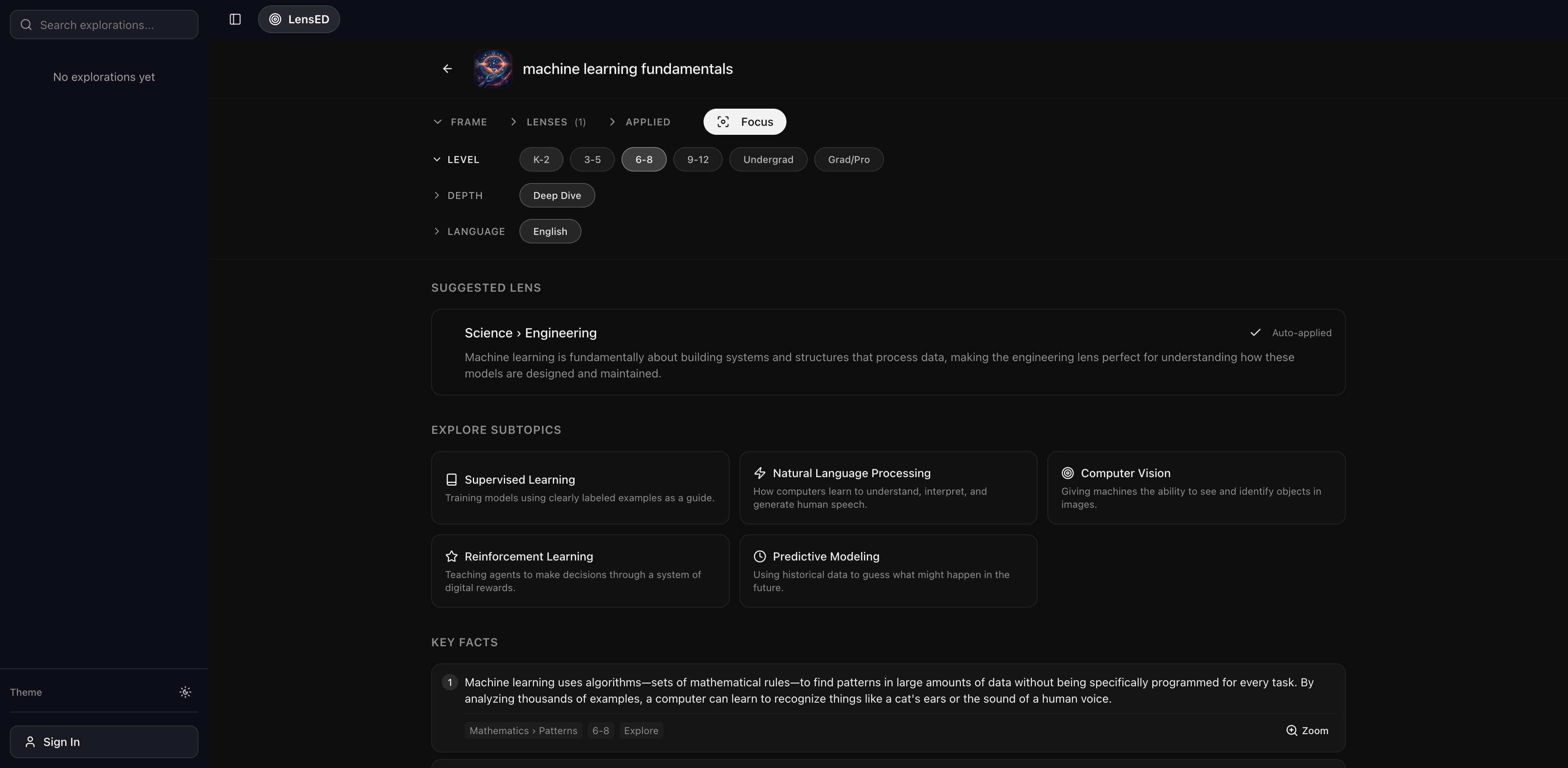
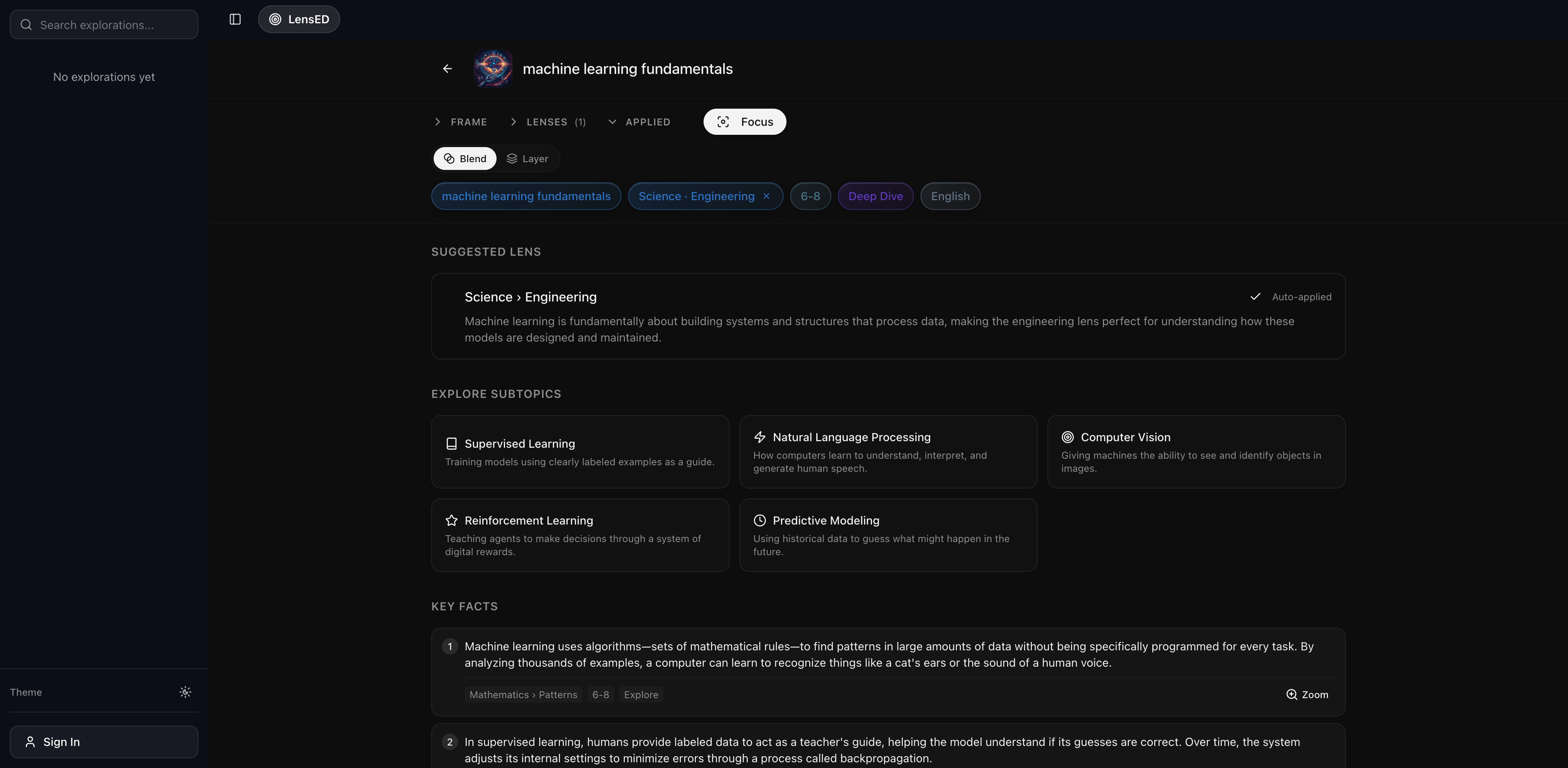
Customize the educational context:
- Level: K-2, 3-5, 6-8, 9-12, Undergrad, Grad/Pro
- Depth: Controls exploration depth (e.g., "Deep Dive", "Explore")
- Language: Currently English
The core feature - 10 lens categories with 40+ sub-lenses:
| Category | Description | Sub-lenses |
|---|---|---|
| Science | How things work | Physics, Biology, Chemistry, Ecology, Engineering |
| Arts | Creative expression | Music, Literature, Cinema, Visual Arts, Performing Arts |
| History | Origins, evolution | Ancient, Medieval, Early Modern, Modern, Contemporary |
| Practice | Everyday use | Home, Work, Hobby, Survival |
| Philosophy | Meaning, ethics | Ethics, Metaphysics, Epistemology, Aesthetics |
| Design | Form, visual choices | Visual, Product, UX/Interaction, Craft |
| Culture | People, traditions | Tradition, Identity, Global, Subculture |
| Mathematics | Patterns, numbers | Geometry, Patterns, Statistics, Algebra, Applied Math |
| Projects | Doable project ideas | Film It, Build It, Test It, Design It, Teach It, Code It |
| Geography | Regional perspective | US, UK, China, India, Brazil, Other |
Shows current configuration with "Blend" and "Layer" options for combining lenses.
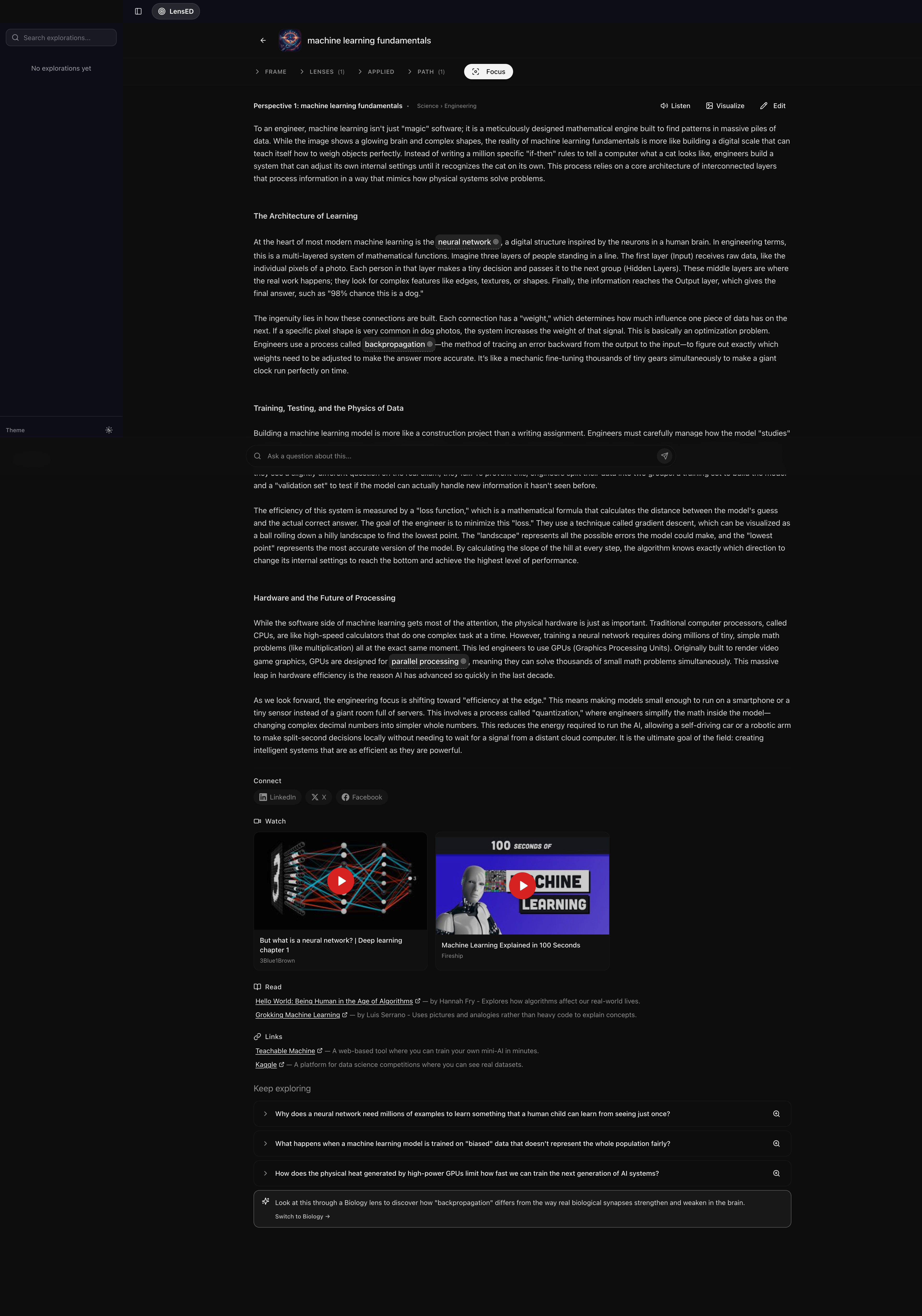
The most impressive feature - generates comprehensive educational content:
- Long-form essay with clickable terms for deeper exploration
- Connect: Links to experts (Andrew Ng, Fei-Fei Li, Yann LeCun)
- Watch: YouTube video recommendations (3Blue1Brown, Fireship)
- Read: Book recommendations with Amazon links
- Links: Interactive resources (Teachable Machine, Kaggle)
- Keep exploring: Follow-up questions
- Chat input: Ask questions about the topic
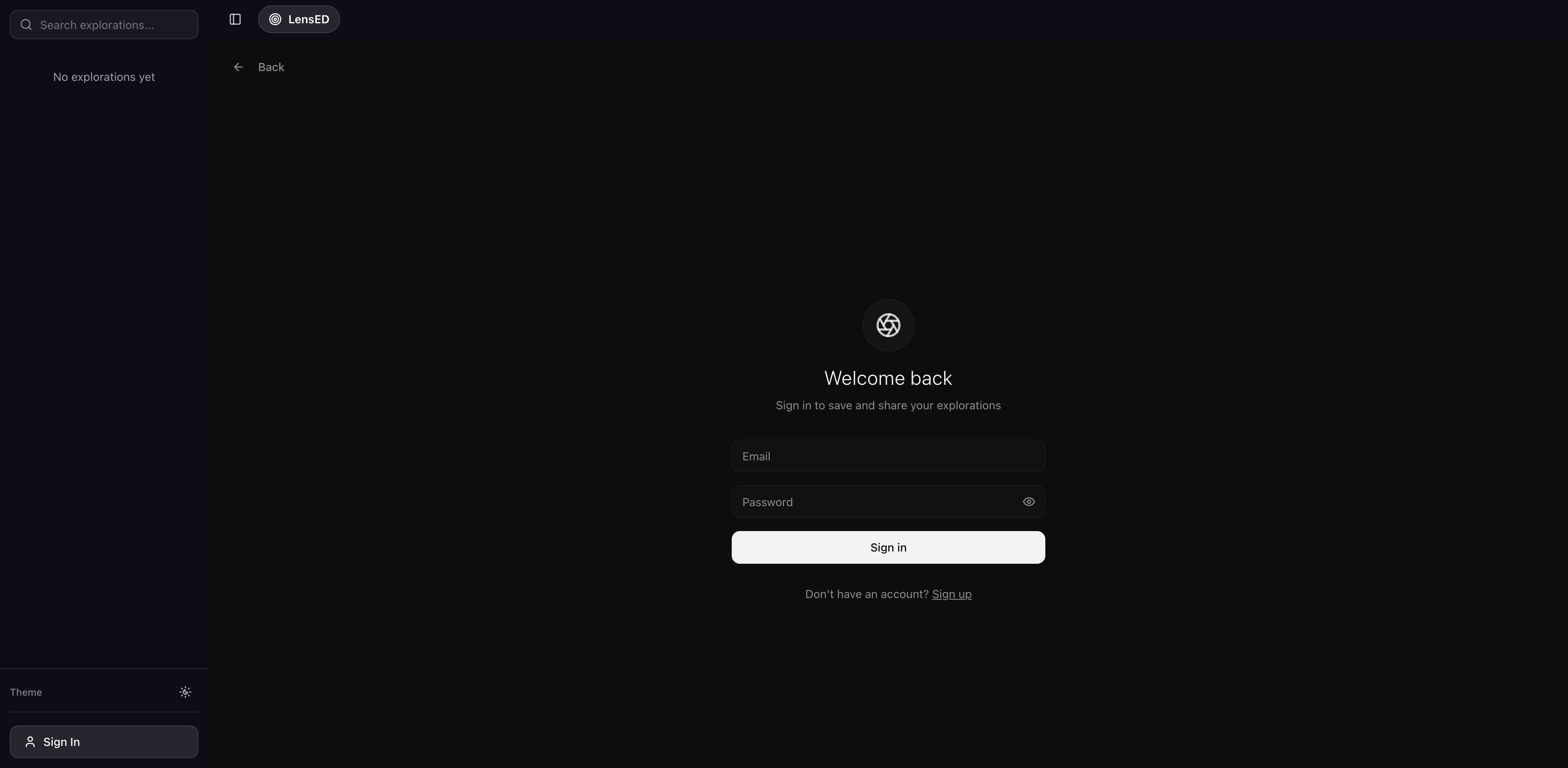
Simple email/password system for saving and sharing explorations.
Can import external URLs (tested with Wikipedia) and apply lens-based exploration.

- Stack: React SPA hosted on Vercel
- AI: Uses edge functions for analysis
- Image Processing: Has optimization (2224KB → 233KB, 90% reduction)
- UI: Clean dark theme with auto theme based on time of day
- Core topic exploration flow
- High-quality AI-generated content
- Comprehensive lens system
- Rich Focus mode with curated resources
- Link import functionality
- Authentication flow
- Theme switching
- Explorations persistence (requires sign-in)
- Image upload (not fully tested)
- Path/history feature
- Blend vs Layer modes
- Location-based features
- Social sharing capabilities
- Target audience? (K-12, homeschooling, lifelong learning?)
- Teacher/classroom management component planned?
- Content moderation approach?
- Which AI models are used?
- API or integration capability?