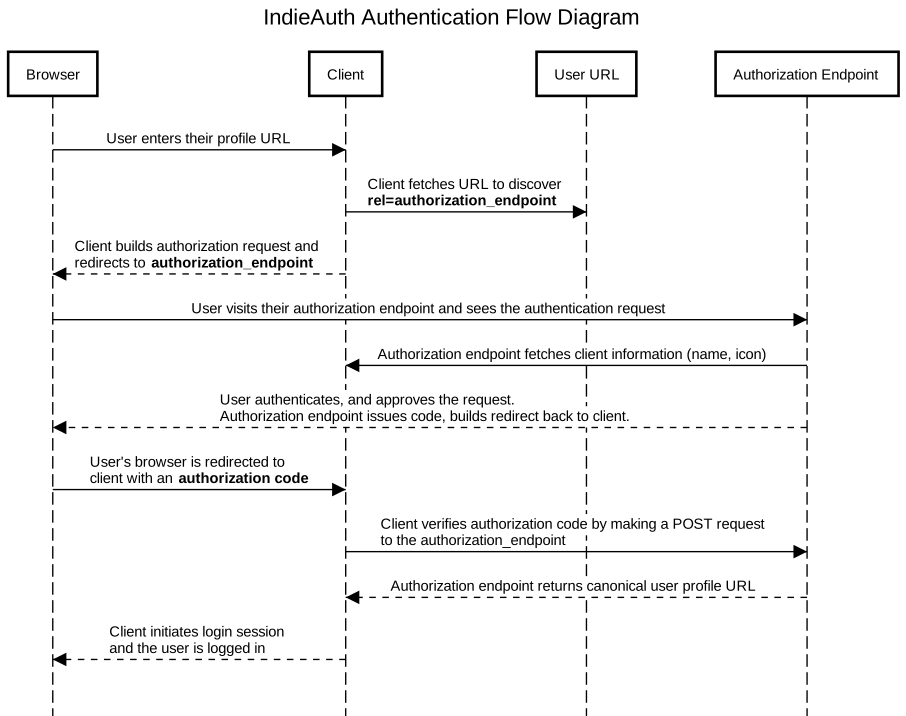
The OAuth 2.0 and OIDC specifications (and related documents) contain various figures/diagrams.
This gist shows all of them together.
Image versions have been added for ASCII/text based version

   +--------+                                          +---------------+
   |        |--(A)-- Token Request ------------------->|               |
   | Client |        (DPoP Proof)                      | Authorization |
   |        |                                          |     Server    |
   |        |<-(B)-- DPoP-bound Access Token ----------|               |
   |        |        (token_type=DPoP)                 +---------------+
   |        |        PoP Refresh Token for public clients
   |        |
   |        |                                          +---------------+
   |        |--(C)-- DPoP-bound Access Token --------->|               |
   |        |        (DPoP Proof)                      |    Resource   |
   |        |                                          |     Server    |
   |        |<-(D)-- Protected Resource ---------------|               |
   |        |                                          +---------------+
   +--------+

                          Figure 1: Basic DPoP Flow
+--------+                                   +--------+
|        |                                   |        |
|        |---------(1) AuthN Request-------->|        |
|        |                                   |        |
|        |  +--------+                       |        |
|        |  |        |                       |        |
|        |  |  End-  |<--(2) AuthN & AuthZ-->|        |
|        |  |  User  |                       |        |
|   RP   |  |        |                       |   OP   |
|        |  +--------+                       |        |
|        |                                   |        |
|        |<--------(3) AuthN Response--------|        |
|        |                                   |        |
|        |---------(4) UserInfo Request----->|        |
|        |                                   |        |
|        |<--------(5) UserInfo Response-----|        |
|        |                                   |        |
+--------+                                   +--------+
Source: https://openid.net/specs/openid-connect-core-1_0.html
+----------+     +----------+      +-----------+      +------------+
|  Native  |     |  Native  |      |  System   |      |            |
|  App     |     |  App     |      |  Browser  |      |    AS      |
|  #1      |     |  #2      |      |           |      |            |
+----+-----+     +----+-----+      +-----+-----+      +-----+------+
     |                |                  |                  |
     | [1] Start OIDC AuthN              |                  |
     +----------------+----------------> |                  |
     |                |                  | [2] /authorize   |
     |                |                  +----------------> |
     |                |                  |                  |
     |                |                  |   [3] authenticate
     |                |                  | <----------------|
     |                |                  |                  |
     |                |                  | [4] user creds   |
     |                |                  +----------------> |
     |                |                  |                  |
     |                |                  |  [5] callback    |
     |                |                  | <----------------+
     |  [6] callback with code           |                  |
     | <--------------+------------------+                  |
     |                |                  |                  |
     |  [7] exchange code for tokens     |                  |
     +----------------+-----------------------------------> |
     |                |                  |                  |
     |     [8] tokens (including device_secret)             |
     | <--------------+------------------+------------------+
     |                |                  |                  |
     |                |                  |                  |
     |                |                  |                  |
     +                +                  +                  +
Steps [1] - [8] are the standard OpenID Connect authorization_code flow with the following extensions. In step 2, the device_sso scope is specified signifying that the client is requesting a device_secret to be returned when the code is exchanged for tokens.
+----------+     +----------+      +-----------+      +------------+
|  Native  |     |  Native  |      |  System   |      |            |
|  App     |     |  App     |      |  Browser  |      |    AS      |
|  #1      |     |  #2      |      |           |      |            |
+----+-----+     +----+-----+      +-----+-----+      +-----+------+
     |                |                  |                  |
     |                |                  |                  |
     |                | [9] token exchange                  |
     |                +------------------+----------------> |
     |                |                  |                  |
     |                |                  |                  |
     |                |    [10] refresh, access, [device_secret]
     |                | <----------------+------------------|
     |                |                  |                  |
     |                |                  |                  |
     |                |                  |                  |
     +                +                  +                  +
Step [9] invokes the /token endpoint with the token exchange profile passing the id_token obtained from the shared device storage, the client_id and the device secret.
Step [10] returns the SSO generated refresh and access tokens for Native App #2.
Source: https://openid.net/specs/openid-connect-native-sso-1_0.html
     +--------+                               +---------------+
     |        |--(A)- Authorization Request ->|   Resource    |
     |        |                               |     Owner     |
     |        |<-(B)-- Authorization Grant ---|               |
     |        |                               +---------------+
     |        |
     |        |                               +---------------+
     |        |--(C)-- Authorization Grant -->| Authorization |
     | Client |                               |     Server    |
     |        |<-(D)----- Access Token -------|               |
     |        |                               +---------------+
     |        |
     |        |                               +---------------+
     |        |--(E)----- Access Token ------>|    Resource   |
     |        |                               |     Server    |
     |        |<-(F)--- Protected Resource ---|               |
     +--------+                               +---------------+

                     Figure 1: Abstract Protocol Flow
  +--------+                                           +---------------+
  |        |--(A)------- Authorization Grant --------->|               |
  |        |                                           |               |
  |        |<-(B)----------- Access Token -------------|               |
  |        |               & Refresh Token             |               |
  |        |                                           |               |
  |        |                            +----------+   |               |
  |        |--(C)---- Access Token ---->|          |   |               |
  |        |                            |          |   |               |
  |        |<-(D)- Protected Resource --| Resource |   | Authorization |
  | Client |                            |  Server  |   |     Server    |
  |        |--(E)---- Access Token ---->|          |   |               |
  |        |                            |          |   |               |
  |        |<-(F)- Invalid Token Error -|          |   |               |
  |        |                            +----------+   |               |
  |        |                                           |               |
  |        |--(G)----------- Refresh Token ----------->|               |
  |        |                                           |               |
  |        |<-(H)----------- Access Token -------------|               |
  +--------+           & Optional Refresh Token        +---------------+

               Figure 2: Refreshing an Expired Access Token
     +----------+
     | Resource |
     |   Owner  |
     |          |
     +----------+
          ^
          |
         (B)
     +----|-----+          Client Identifier      +---------------+
     |         -+----(A)-- & Redirection URI ---->|               |
     |  User-   |                                 | Authorization |
     |  Agent  -+----(B)-- User authenticates --->|     Server    |
     |          |                                 |               |
     |         -+----(C)-- Authorization Code ---<|               |
     +-|----|---+                                 +---------------+
       |    |                                         ^      v
      (A)  (C)                                        |      |
       |    |                                         |      |
       ^    v                                         |      |
     +---------+                                      |      |
     |         |>---(D)-- Authorization Code ---------'      |
     |  Client |          & Redirection URI                  |
     |         |                                             |
     |         |<---(E)----- Access Token -------------------'
     +---------+       (w/ Optional Refresh Token)

   Note: The lines illustrating steps (A), (B), and (C) are broken into
   two parts as they pass through the user-agent.

                     Figure 3: Authorization Code Flow
     +----------+
     | Resource |
     |  Owner   |
     |          |
     +----------+
          ^
          |
         (B)
     +----|-----+          Client Identifier     +---------------+
     |         -+----(A)-- & Redirection URI --->|               |
     |  User-   |                                | Authorization |
     |  Agent  -|----(B)-- User authenticates -->|     Server    |
     |          |                                |               |
     |          |<---(C)--- Redirection URI ----<|               |
     |          |          with Access Token     +---------------+
     |          |            in Fragment
     |          |                                +---------------+
     |          |----(D)--- Redirection URI ---->|   Web-Hosted  |
     |          |          without Fragment      |     Client    |
     |          |                                |    Resource   |
     |     (F)  |<---(E)------- Script ---------<|               |
     |          |                                +---------------+
     +-|--------+
       |    |
      (A)  (G) Access Token
       |    |
       ^    v
     +---------+
     |         |
     |  Client |
     |         |
     +---------+

   Note: The lines illustrating steps (A) and (B) are broken into two
   parts as they pass through the user-agent.

                       Figure 4: Implicit Grant Flow
     +----------+
     | Resource |
     |  Owner   |
     |          |
     +----------+
          v
          |    Resource Owner
         (A) Password Credentials
          |
          v
     +---------+                                  +---------------+
     |         |>--(B)---- Resource Owner ------->|               |
     |         |         Password Credentials     | Authorization |
     | Client  |                                  |     Server    |
     |         |<--(C)---- Access Token ---------<|               |
     |         |    (w/ Optional Refresh Token)   |               |
     +---------+                                  +---------------+

            Figure 5: Resource Owner Password Credentials Flow
     +---------+                                  +---------------+
     |         |                                  |               |
     |         |>--(A)- Client Authentication --->| Authorization |
     | Client  |                                  |     Server    |
     |         |<--(B)---- Access Token ---------<|               |
     |         |                                  |               |
     +---------+                                  +---------------+

                     Figure 6: Client Credentials Flow
Source: RFC-6749
     +--------+                               +---------------+
     |        |--(A)- Authorization Request ->|   Resource    |
     |        |                               |     Owner     |
     |        |<-(B)-- Authorization Grant ---|               |
     |        |                               +---------------+
     |        |
     |        |                               +---------------+
     |        |--(C)-- Authorization Grant -->| Authorization |
     | Client |                               |     Server    |
     |        |<-(D)----- Access Token -------|               |
     |        |                               +---------------+
     |        |
     |        |                               +---------------+
     |        |--(E)----- Access Token ------>|    Resource   |
     |        |                               |     Server    |
     |        |<-(F)--- Protected Resource ---|               |
     +--------+                               +---------------+

                     Figure 1: Abstract Protocol Flow
     Relying
     Party                     Client                   Token Service
       |                          |                         |
       |                          |  1) Request Assertion   |
       |                          |------------------------>|
       |                          |                         |
       |                          |  2) Assertion           |
       |                          |<------------------------|
       |    3) Assertion          |                         |
       |<-------------------------|                         |
       |                          |                         |
       |    4) OK or Failure      |                         |
       |------------------------->|                         |
       |                          |                         |
       |                          |                         |

                Figure 1: Assertion Created by Third Party
     Relying
     Party                     Client
       |                          |
       |                          | 1) Create
       |                          |    Assertion
       |                          |--------------+
       |                          |              |
       |                          | 2) Assertion |
       |                          |<-------------+
       |    3) Assertion          |
       |<-------------------------|
       |                          |
       |    4) OK or Failure      |
       |------------------------->|
       |                          |
       |                          |

                      Figure 2: Self-Issued Assertion
        +--------(A)- Initial Access Token (OPTIONAL)
        |
        |   +----(B)- Software Statement (OPTIONAL)
        |   |
        v   v
    +-----------+                                      +---------------+
    |           |--(C)- Client Registration Request -->|    Client     |
    | Client or |                                      | Registration  |
    | Developer |<-(D)- Client Information Response ---|   Endpoint    |
    |           |        or Client Error Response      +---------------+
    +-----------+

   Figure 1: Abstract Dynamic Client Registration Flow
        +--------(A)- Initial Access Token (OPTIONAL)
        |
        |   +----(B)- Software Statement (OPTIONAL)
        |   |
        v   v
    +-----------+                                      +---------------+
    |           |--(C)- Client Registration Request -->|    Client     |
    |           |                                      | Registration  |
    |           |<-(D)- Client Information Response ---|   Endpoint    |
    |           |                                      +---------------+
    |           |
    |           |                                      +---------------+
    | Client or |--(E)- Read or Update Request ------->|               |
    | Developer |                                      |               |
    |           |<-(F)- Client Information Response ---|    Client     |
    |           |                                      | Configuration |
    |           |                                      |   Endpoint    |
    |           |                                      |               |
    |           |--(G)- Delete Request --------------->|               |
    |           |                                      |               |
    |           |<-(H)- Delete Confirmation -----------|               |
    +-----------+                                      +---------------+
    +~~~~~~~~~~~~~~~~~~~~~~~~~~~~~~~~+
    | End Device (e.g., Smartphone)  |
    |                                |
    | +-------------+   +----------+ | (6) Access Token  +----------+
    | |Legitimate   |   | Malicious|<--------------------|          |
    | |OAuth 2.0 App|   | App      |-------------------->|          |
    | +-------------+   +----------+ | (5) Authorization |          |
    |        |    ^          ^       |        Grant      |          |
    |        |     \         |       |                   |          |
    |        |      \   (4)  |       |                   |          |
    |    (1) |       \  Authz|       |                   |          |
    |   Authz|        \ Code |       |                   |  Authz   |
    | Request|         \     |       |                   |  Server  |
    |        |          \    |       |                   |          |
    |        |           \   |       |                   |          |
    |        v            \  |       |                   |          |
    | +----------------------------+ |                   |          |
    | |                            | | (3) Authz Code    |          |
    | |     Operating System/      |<--------------------|          |
    | |         Browser            |-------------------->|          |
    | |                            | | (2) Authz Request |          |
    | +----------------------------+ |                   +----------+
    +~~~~~~~~~~~~~~~~~~~~~~~~~~~~~~~~+

             Figure 1: Authorization Code Interception Attack
                                                 +-------------------+
                                                 |   Authz Server    |
       +--------+                                | +---------------+ |
       |        |--(A)- Authorization Request ---->|               | |
       |        |       + t(code_verifier), t_m  | | Authorization | |
       |        |                                | |    Endpoint   | |
       |        |<-(B)---- Authorization Code -----|               | |
       |        |                                | +---------------+ |
       | Client |                                |                   |
       |        |                                | +---------------+ |
       |        |--(C)-- Access Token Request ---->|               | |
       |        |          + code_verifier       | |    Token      | |
       |        |                                | |   Endpoint    | |
       |        |<-(D)------ Access Token ---------|               | |
       +--------+                                | +---------------+ |
                                                 +-------------------+

                     Figure 2: Abstract Protocol Flow
  +~~~~~~~~~~~~~~~~~~~~~~~~~~~~~~~+
  |          User Device          |
  |                               |
  | +--------------------------+  | (5) Authorization  +---------------+
  | |                          |  |     Code           |               |
  | |        Client App        |---------------------->|     Token     |
  | |                          |<----------------------|    Endpoint   |
  | +--------------------------+  | (6) Access Token,  |               |
  |   |             ^             |     Refresh Token  +---------------+
  |   |             |             |
  |   |             |             |
  |   | (1)         | (4)         |
  |   | Authorizat- | Authoriza-  |
  |   | ion Request | tion Code   |
  |   |             |             |
  |   |             |             |
  |   v             |             |
  | +---------------------------+ | (2) Authorization  +---------------+
  | |                           | |     Request        |               |
  | |          Browser          |--------------------->| Authorization |
  | |                           |<---------------------|    Endpoint   |
  | +---------------------------+ | (3) Authorization  |               |
  |                               |     Code           +---------------+
  +~~~~~~~~~~~~~~~~~~~~~~~~~~~~~~~+

       Figure 1: Native App Authorization via an External User-Agent
Source: RFC-8252
      +----------+                                +----------------+
      |          |>---(A)-- Client Identifier --->|                |
      |          |                                |                |
      |          |<---(B)-- Device Code,      ---<|                |
      |          |          User Code,            |                |
      |  Device  |          & Verification URI    |                |
      |  Client  |                                |                |
      |          |  [polling]                     |                |
      |          |>---(E)-- Device Code       --->|                |
      |          |          & Client Identifier   |                |
      |          |                                |  Authorization |
      |          |<---(F)-- Access Token      ---<|     Server     |
      +----------+   (& Optional Refresh Token)   |                |
            v                                     |                |
            :                                     |                |
           (C) User Code & Verification URI       |                |
            :                                     |                |
            v                                     |                |
      +----------+                                |                |
      | End User |                                |                |
      |    at    |<---(D)-- End user reviews  --->|                |
      |  Browser |          authorization request |                |
      +----------+                                +----------------+

                    Figure 1: Device Authorization Flow
            +-----------------------------------------------+
            |                                               |
            |  Using a browser on another device, visit:    |
            |  https://example.com/device                   |
            |                                               |
            |  And enter the code:                          |
            |  WDJB-MJHT                                    |
            |                                               |
            +-----------------------------------------------+

                    Figure 2: Example User Instruction
            +-------------------------------------------------+
            |                                                 |
            |  Scan the QR code or, using     +------------+  |
            |  a browser on another device,   |[_]..  . [_]|  |
            |  visit:                         | .  ..   . .|  |
            |  https://example.com/device     | . .  . ....|  |
            |                                 |.   . . .   |  |
            |  And enter the code:            |[_]. ... .  |  |
            |  WDJB-MJHT                      +------------+  |
            |                                                 |
            +-------------------------------------------------+

      Figure 3: Example User Instruction with QR Code Representation
                     of the Complete Verification URI
     +--------+                                 +---------------+
     |        |                                 |               |
     |        |<--(A)-- Get an access token --->| Authorization |
     |        |                                 |     Server    |
     |        |                                 |               |
     |        |                                 +---------------+
     |        |                                         ^
     |        |                                         |
     |        |
     |        |                               (C)       |
     | Client |                           Validate the
     |        |                           access token  |
     |        |
     |        |                                         |
     |        |                                         v
     |        |                                 +---------------+
     |        |                                 |      (C)      |
     |        |                                 |               |
     |        |<--(B)-- Use the access token -->|   Protected   |
     |        |                                 |    Resource   |
     |        |                                 |               |
     +--------+                                 +---------------+

                 Figure 1: Abstract OAuth 2.0 Protocol Flow
Source: https://www.w3.org/TR/indieauth/