
A Systems-Level Deep Dive for C and C++ Developers

Disclaimer: ChatGPT generated document.
Below is a full, deep, and comprehensive article on endianness, alignment, and padding, written from a systems / C++ perspective and aimed at someone who already thinks about ABI, performance, and portability.
I’ll build this bottom-up, starting from physical memory, then CPU rules, then language rules, and finally real-world consequences in C++.
Before anything else, lock in this model:
Memory is a linear array of bytes.
Everything else—int, float, structs, arrays, objects—is an interpretation layered on top of that byte array by:
- The CPU
- The ABI
- The compiler
- The language rules
Most bugs around endianness, alignment, and padding happen when we forget who is responsible for which rule.
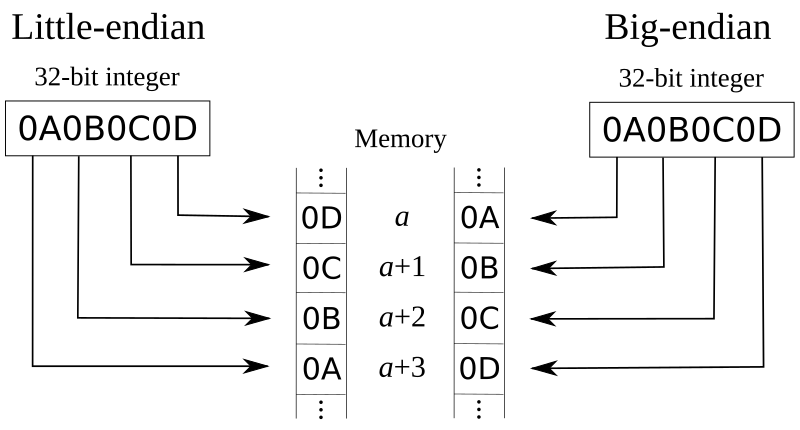
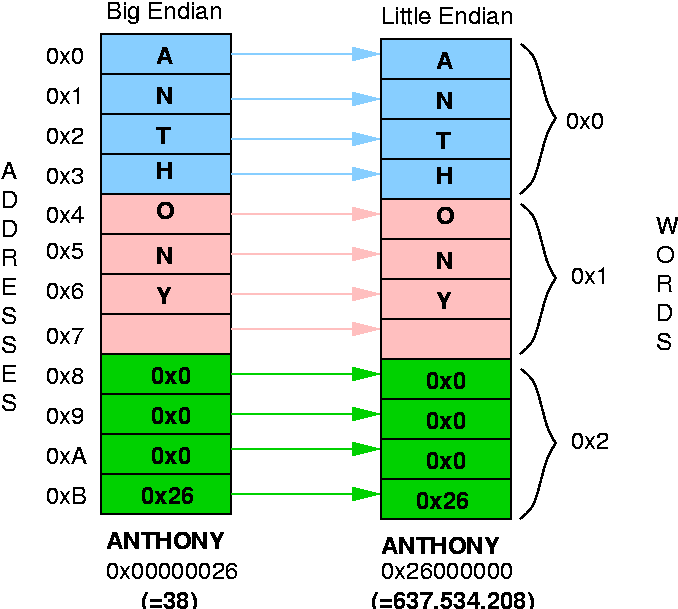
Endianness defines how multi-byte scalar values are laid out in memory.
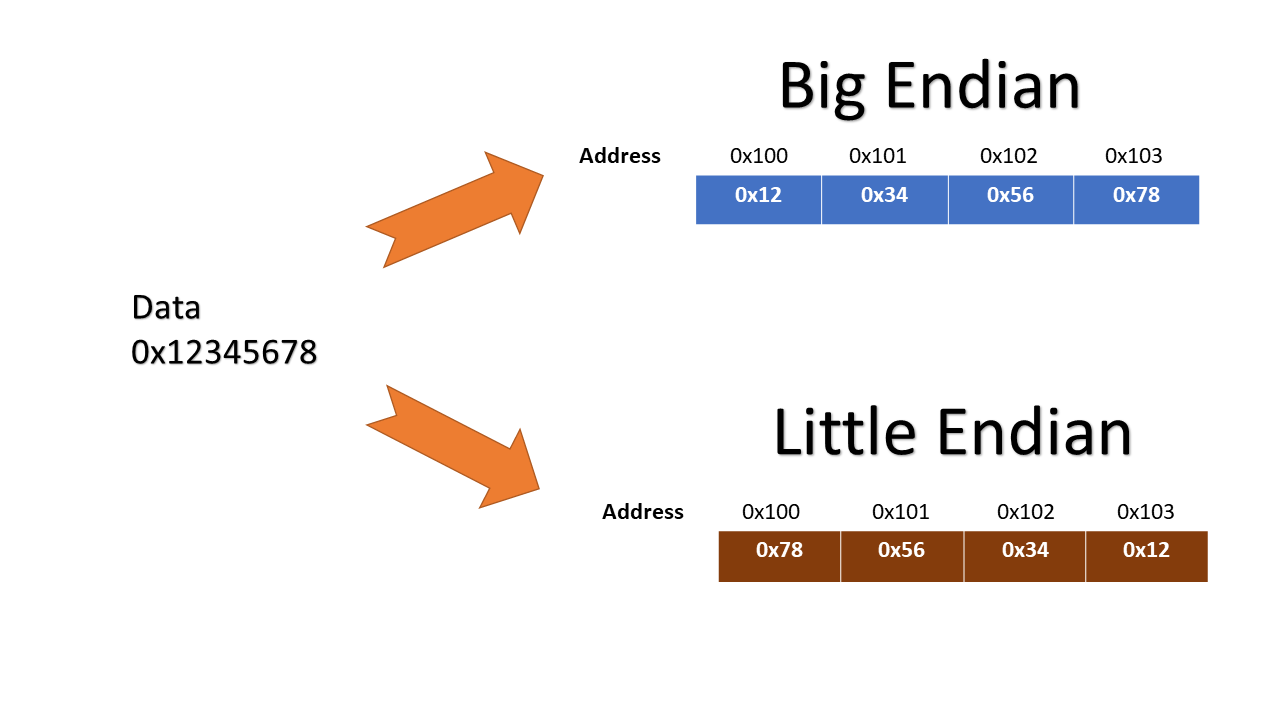
Consider a 32-bit value:
0x12 34 56 78
This is a number. Memory needs to store it as bytes.

| Endianness | Lowest address | Highest address |
|---|---|---|
| Little | 78 56 34 12 |
→ |
| Big | 12 34 56 78 |
→ |
- Little-endian: least significant byte first
- Big-endian: most significant byte first
Modern CPUs (x86, ARM in LE mode, RISC-V) are little-endian because:
- Incremental arithmetic is simpler
- Casting smaller types is cheaper
- Historical inertia (x86 dominance)
Big-endian still exists in:
- Networking protocols (network byte order)
- Some DSPs
- Legacy systems
Endianness affects only:
- Multi-byte scalar objects (
uint16_t,uint32_t,float,double, pointers)
It does not affect:
- Byte-sized objects (
char,std::byte,uint8_t) - Bitwise operations inside a register
- Object identity
In C++:
- Endianness is implementation-defined
- You must not assume little-endian unless you explicitly restrict platforms
C++20 finally gives you a way to ask:
#include <bit>

if constexpr (std::endian::native == std::endian::little) {
    // ...
}Important distinction:
Endianness rearranges bytes, not bits.
For example, IEEE-754 floats:
- Have a defined bit layout
- But the byte order of those bits depends on endianness
That’s why:
memcpypreserves bit patterns- Serialization must normalize byte order
Networking standardized on big-endian so all machines agree.
Hence:
htonl()  // host → network
ntohl()  // network → host
If you send raw structs over the wire without conversion:
- ❌ Breaks on different endianness
- ❌ Breaks on different padding
- ❌ Breaks on different alignment
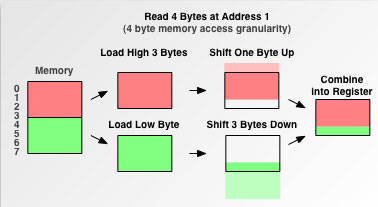
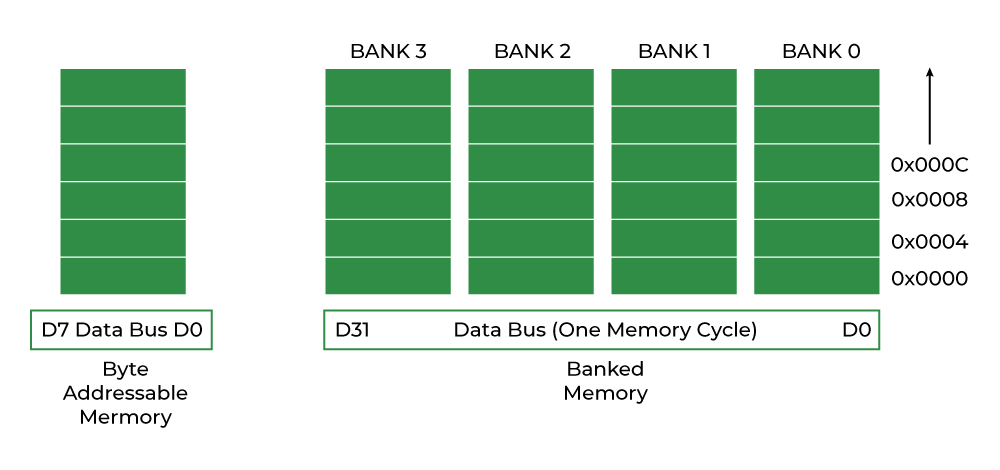
Alignment is a constraint imposed by the CPU:
Certain types must be stored at memory addresses divisible by some power of two.
Example:
uint32_t→ alignment 4- Must live at addresses
0x...0,0x...4,0x...8, …

Alignment exists because:
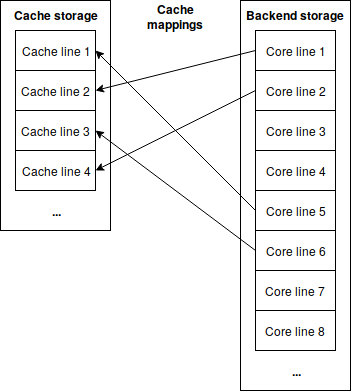
- CPUs fetch memory in chunks (cache lines)
- Misaligned loads may:
- Take multiple cycles
- Require multiple memory accesses
- Trap entirely on some architectures
| Architecture | Misaligned access |
|---|---|
| x86 | Allowed, slower |
| ARM | Sometimes traps |
| SPARC | Traps |
| RISC-V | Often traps |
So alignment is not “optional paranoia” — it’s hardware law.
C++ exposes alignment via:
alignof(T)Examples:
alignof(char)      == 1
alignof(int)       == 4
alignof(double)    == 8
alignof(void*)     == 8 (on 64-bit)
The compiler must:
- Place objects at aligned addresses
- Insert padding when necessary
- Reject misaligned references
C++11 introduced over-aligned types:
struct alignas(64) CacheLine {
    int data;
};
Used for:
- Cache-line isolation
- False-sharing prevention
- SIMD data
Classic bug:
char buffer[16];
int* p = reinterpret_cast<int*>(buffer + 1); // ❌ UB
Even if it “works on x86”:
- UB by the language
- May crash on ARM
- Sanitizers will flag it
Padding is unused space inserted by the compiler to satisfy alignment rules.
It exists:
- Between struct members
- At the end of structs
Given:
struct S {
    char c;
    int  i;
};
Memory layout (typical):

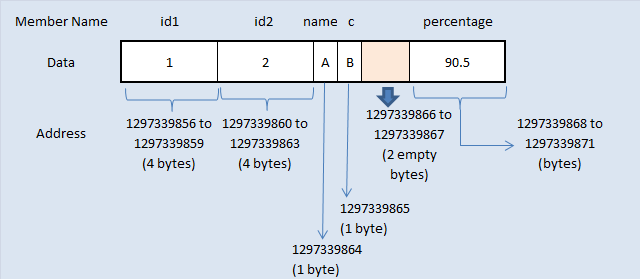
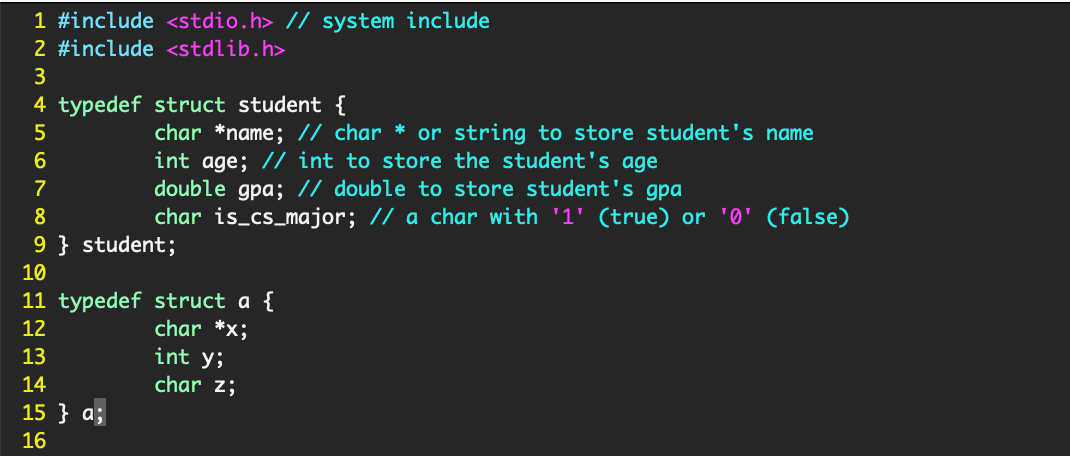
offset 0: char c
offset 1–3: padding
offset 4–7: int i
Why?
intrequires alignment 4- Compiler inserts padding to satisfy it
struct T {
    int i;
    char c;
};
Layout:
int (4 bytes)
char (1 byte)
padding (3 bytes)
Why?
- Arrays of
Trequire each element aligned properly
Padding:
- Contributes to
sizeof(T) - Is copied by
memcpy - Is compared by
memcmp
But:
- Padding bytes have indeterminate values
- Reading them is undefined behavior
This breaks:
- Hashing
- Serialization
- Equality comparisons
#pragma pack(push, 1)
struct Packed {
    char c;
    int i;
};
#pragma pack(pop)
Result:
- No padding
- Misaligned
int - Possible traps or slow accesses
Use only for:
- Wire formats
- Disk layouts
- Explicit byte manipulation
Never use packed structs for:
- Normal computation
- Hot paths
- Arbitrary pointer casting
A struct layout depends on:
- Endianness
- Alignment rules
- Padding rules
- ABI
- Compiler
This means:
You cannot safely serialize a struct by dumping its bytes.
Ever.
If you send this over the network:
struct Packet {
    uint32_t id;
    uint16_t len;
    char flag;
};
You have three independent problems:
- Endianness of integers
- Padding between members
- Alignment expectations on the receiver
Only serialize explicitly defined byte sequences.
Example:
uint32_t id = htonl(packet.id);
uint16_t len = htons(packet.len);
Or use:
- Protocol Buffers
- FlatBuffers
- Cap’n Proto
- Manual byte packing
- Assume nothing
- Normalize when crossing boundaries
- Use
std::endian - Use
std::bit_cast, not unions
- Respect
alignof - Never cast misaligned pointers
- Use
alignasfor performance, not correctness - Be wary of packed structs
- Never rely on struct layout
- Never
memcmpstructs - Never serialize raw structs
- Initialize everything if hashing
- Endianness: “Byte order matters when bytes leave the CPU.”
- Alignment: “The CPU decides where objects may live.”
- Padding: “The compiler inserts space you didn’t ask for.”
Given your background in:
- Modern C++
- Networking
- Low-level abstractions
- Cross-platform libraries
These rules directly affect:
- Socket APIs
- Binary protocols
- Zero-copy buffers
- SIMD and cache-line tuning
- ABI stability
If you want, next we can:
- Analyze real compiler-generated layouts
- Deep-dive ABI guarantees vs myths
- Design a portable binary format from scratch
- Audit a real struct for hidden UB
Just tell me how far you want to go.

https://en.wikipedia.org/wiki/Endianness
https://en.wikipedia.org/wiki/Data_structure_alignment
https://en.wikipedia.org/wiki/CPU_cache
https://commandcenter.blogspot.com/2012/04/byte-order-fallacy.html