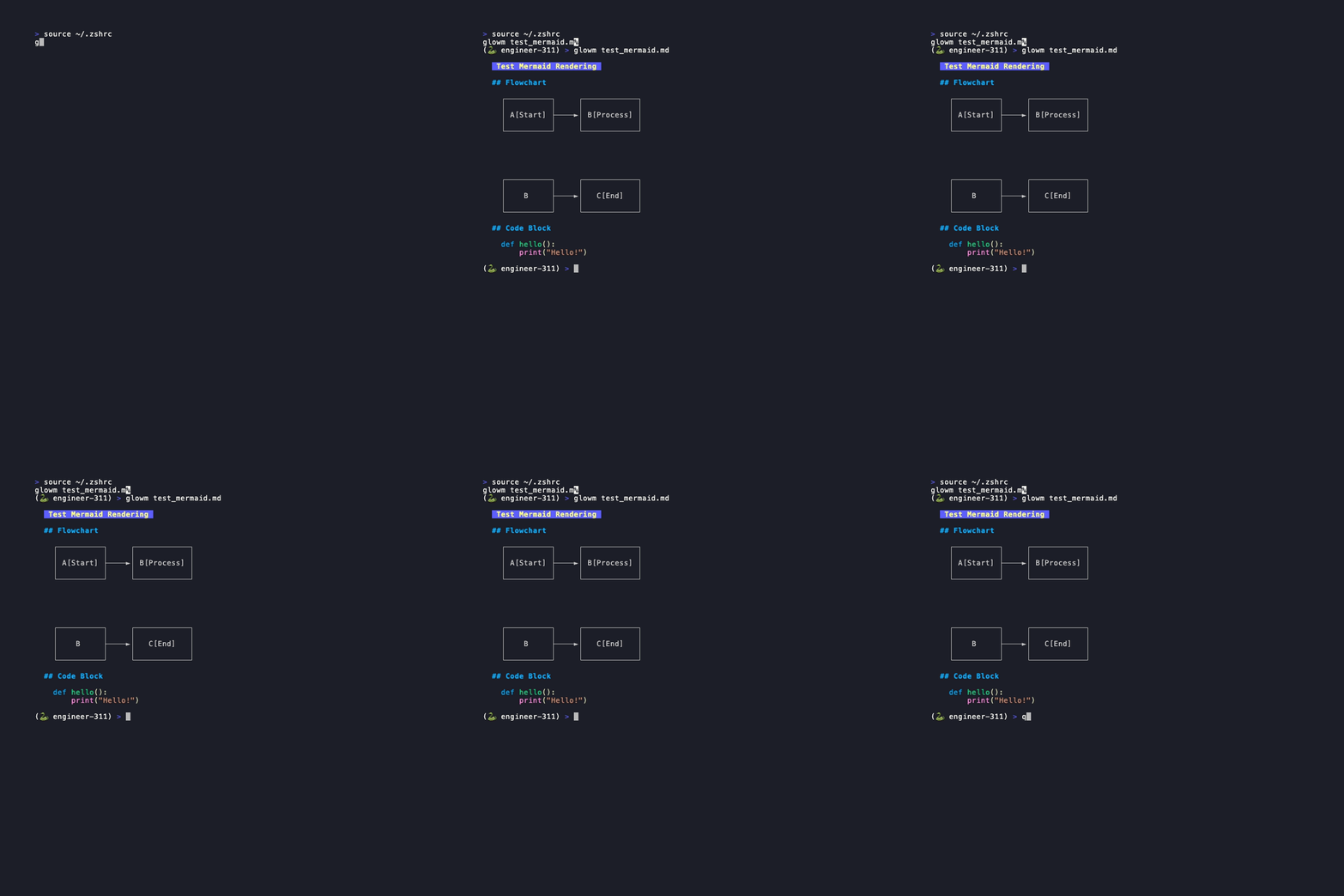
A wrapper for glow that renders mermaid diagrams as ASCII art using mermaid-ascii.
- Install dependencies:


A wrapper for glow that renders mermaid diagrams as ASCII art using mermaid-ascii.
| { | |
| "nodes": { | |
| "action-hints.nvim": { | |
| "flake": false, | |
| "locked": { | |
| "lastModified": 1694254260, | |
| "narHash": "sha256-BTXmb1uGbXKkORnf1hbEa8jEmpPpzjMaerdldo5tkxs=", | |
| "owner": "roobert", | |
| "repo": "action-hints.nvim", | |
| "rev": "ab10fef255dd4bc933c92d8f9969828f2f856e71", |
Given a foreign binary on a Nix system, you have to patch its dynamic linker/loader.
First you need to find out what linker/loader to use.
You can do this by going into your nix repl and loading your desired nixpkgs.
Then you run:
Modern versions of Windows support GPU paravirtualization in Hyper-V with normal consumer graphics cards. This is used e.g. for graphics acceleration in Windows Sandbox, as well as WSLg. In some cases, it may be useful to create a normal VM with GPU acceleration using this feature, but this is not officially supported. People already figured out how to do it with Windows guests though, so why not do the same with Linux? It should be easy given that WSLg is open source and reasonably well documented, right?
Well... not quite. I managed to get it to run... but not well.
| [package] | |
| name = "pocket2linkhut" | |
| version = "0.1.0" | |
| edition = "2024" | |
| [dependencies] | |
| anyhow = "1.0" | |
| argh = "0.1" | |
| csv = "1.3" | |
| serde = { version = "1.0", features = ["derive"] } |
| cheatsheet.tex | |
| *.aux | |
| *.fls | |
| *.log | |
| *.synctex.gz | |
| *.fdb_latexmk | |
| *.lot |
NixOS provides good support for the Xfce desktop environment out-of-the-box, but the defaults are minimal. The files in this Gist provide a more complete experience, including a suite of basic software and plugins as well as an optional home-manager configuration for theming.
The key additions to the default Xfce provided by NixOS are:
ls -1 | egrep '.*m4a' -o | sed -e "s/^'//" > out.m3u
pkgs.package.override - res of lib.makeOverridable (used by callPackage),
overrides arguments of callPackage
https://nixos.org/nixos/nix-pills/override-design-pattern.html
pkgs.foo.override { arg1 = val1; arg2 = val2; ... }